
₹80 shipping below ₹699. Free shipping on orders of ₹699 and above.₹80 shipping below ₹699. Free shipping on orders of ₹699 and above.

Category: Carry Guides

  • How to Choose a Crossbody Phone Pouch for Everyday Use

    How to Choose a Crossbody Phone Pouch for Everyday Use

    A crossbody phone pouch is useful when you want your phone and a few small essentials within easy reach without carrying a full-size bag. The right one should suit what you actually carry, sit comfortably when worn and make frequently used items simple to access.

    That sounds straightforward, but small differences in size, strap design, closure and layout can change how practical a pouch feels. This checklist will help you compare those details before buying.

    1. Start with what you genuinely carry

    Before looking at colours or styling, decide what the pouch needs to hold on a normal day.

    A simple everyday list might include:

    • Your phone
    • One or two cards
    • Keys
    • Earphones
    • A small personal item

    The purpose of a phone pouch is usually to keep a short list of essentials close. If you regularly carry a large wallet, charger, power bank, cosmetics, notebook or several other items, a compact sling bag may be the more comfortable choice.

    Place your normal essentials together before shopping. This gives you a much clearer idea of the space you need and helps prevent choosing a pouch simply because it looks compact in a photograph.

    2. Check your phone’s complete size

    Do not rely only on the phone model name. Measure the phone while it is inside the case you normally use.

    Check:

    • Height
    • Width
    • Thickness with the case fitted
    • Any raised camera section or grip accessory

    Compare those measurements with the product’s internal or usable dimensions when available. Leave a little clearance so that the phone can be inserted and removed without catching on the opening or closure.

    If a listing does not provide the measurements you need, ask the seller before ordering. A pouch should not be described as universally compatible unless that claim has been properly verified.

    3. Decide how much separation you need

    Some people prefer one simple compartment. Others want the phone separated from keys or other items that might rub against it.

    When reviewing a pouch, look closely at the product photographs and description:

    • Is there one main space or more than one section?
    • Can keys sit away from the phone?
    • Is there a suitable place for cards?
    • Are small items easy to retrieve?

    A simple layout is often enough for short errands or travel days. If you need several organised sections, compare the pouch with a compact utility sling instead of forcing everything into a smaller format.

    4. Look at the opening and closure

    The opening should be wide enough for easy access but secure enough for the way you plan to use the pouch.

    Common closure types include zips, snaps, magnets and flaps. Each has a different feel. A snap-close flap, for example, can make frequently used items quick to reach, while a zipped compartment may provide more enclosure.

    Check that the closure does not press against the phone, catch its case or become difficult to use when the pouch contains your normal essentials.

    5. Check whether the strap adjusts to your preferred position

    An adjustable strap gives you more control over where the pouch sits. You may prefer it higher across the chest, lower at the hip or somewhere between the two.

    Look for clear photographs of:

    • The strap at different lengths
    • The adjustment hardware
    • Where the strap attaches to the pouch
    • The clips and attachment rings
    • How the pouch sits when worn

    A detachable strap can also make storage and handling easier. Whatever the design, the connection points should be clearly visible in the listing so you know what is included and how it attaches.

    6. Examine the hardware and high-use areas

    Small bags place repeated movement on their clips, rings, adjustment points and closure. Product photographs should let you inspect these areas rather than only showing a distant front view.

    Useful close-ups include:

    • Strap clips
    • Attachment rings
    • Adjustment slider
    • Snap or zip
    • Seams around the opening
    • Corners and edges

    These images do not replace long-term use information, but they help you understand the construction and make a more informed comparison.

    7. Choose a colour you will actually use

    The most practical colour is the one that works with your normal wardrobe and routine.

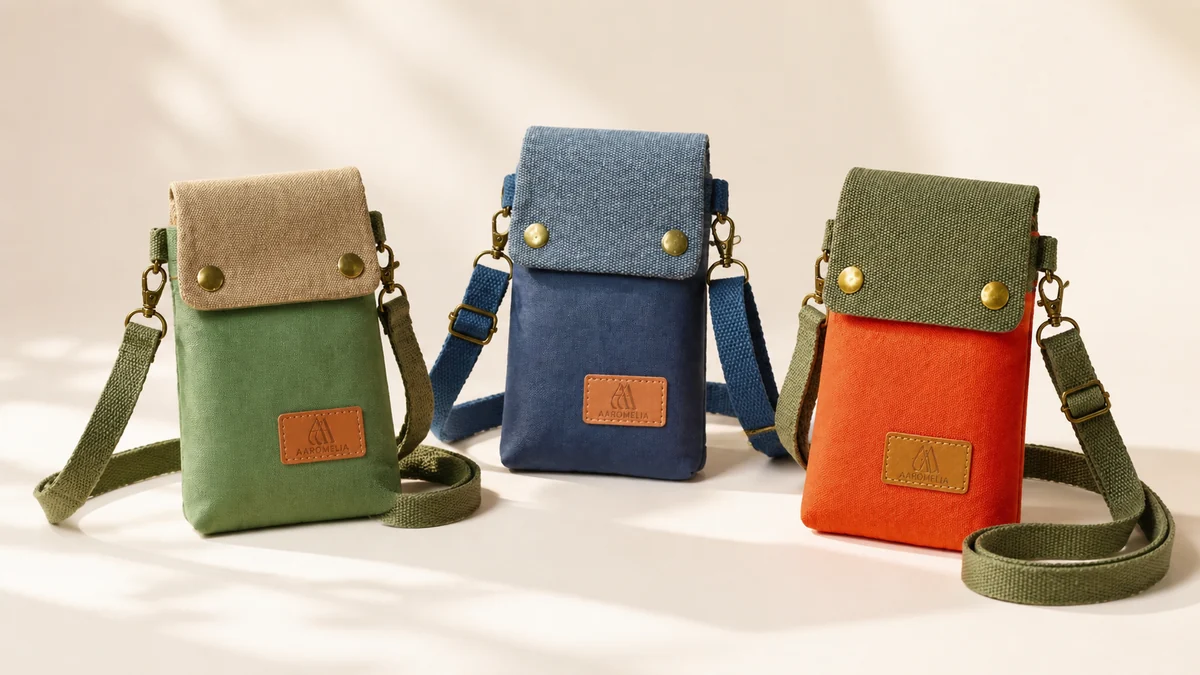
    Neutral colours such as navy can be easy to combine with different outfits. Earthy combinations such as olive and tan can work well with casual, work and travel clothing. A brighter combination such as orange and olive can add a more visible accent.

    Instead of asking which colour is most fashionable, ask which one you would be comfortable carrying repeatedly.

    8. Read the complete listing—not only the main photograph

    Before placing an order, review the entire product page. Confirm:

    • The exact colour name
    • What is included
    • Strap type and whether it is detachable
    • Closure type
    • Product measurements, where supplied
    • Care information
    • Current stock status
    • Shipping charges and threshold
    • Payment options
    • Support contact details

    Clear listings should make these details easy to find. If something important remains unclear, contact the store before ordering.

    Phone pouch or compact sling bag?

    Choose a phone pouch when you want a slim, hands-free option for a phone and a short list of small essentials.

    Consider a compact utility sling when you need more organisation or regularly carry items beyond that short list. Neither format is automatically better; the right choice depends on your actual load and how you move through the day.

    A simple pre-purchase checklist

    Before choosing a phone pouch, confirm that:

    • Your phone has been measured with its case
    • The pouch suits the items you carry most often
    • The opening and closure work for your routine
    • The strap is adjustable to your preferred wearing position
    • The attachment points and hardware are visible
    • The colour works with clothing you already wear
    • The product page clearly explains what is included
    • Stock, shipping, payment and support information are clear

    Explore AAROMELIA crossbody phone pouches

    AAROMELIA’s current in-stock phone-pouch colours are Olive & Tan, Navy, and Orange & Olive. Each uses a slim everyday crossbody format with an adjustable detachable strap, snap-close contrast flap and brass-tone hardware.

    Explore the AAROMELIA Crossbody Pouches collection. If you need help checking a product detail before ordering, message AAROMELIA on WhatsApp between 9 AM and 6 PM IST.

    ₹80 shipping below ₹699. Free shipping on orders of ₹699 and above.

    Frequently asked questions

    How do I know whether my phone will fit?

    Measure the phone with its everyday case fitted and compare its height, width and thickness with the product’s usable dimensions. Allow some clearance for easy removal. Ask the seller if the required measurements are not listed.

    What should I carry in a phone pouch?

    A phone pouch is best suited to a phone and a short list of small essentials such as cards, keys or earphones. If you regularly need more items or separation, consider a compact sling bag.

    Is an adjustable strap important?

    It is useful when you want to change where the pouch sits or wear it in more than one way. Check the strap, adjustment hardware and attachment points in the product photographs.

    Should I choose a zip or a snap-close flap?

    It depends on your routine. A flap can provide quick access, while a zip gives a more enclosed opening. Check how the closure interacts with your phone and the other items you intend to carry.
  • Phone Pouch vs Compact Sling Bag: Which One Fits Your Routine?

    Phone Pouch vs Compact Sling Bag: Which One Fits Your Routine?

    A phone pouch and a compact sling bag both keep essentials close while leaving your hands free. The difference is not simply that one is smaller. Each format supports a different carrying habit.

    A phone pouch works best when you want to carry very little. A compact sling provides more separation when your everyday list includes several small items. The most useful choice is the one that matches what you actually take with you—not the one that looks best while empty.

    The quick answer

    Choose a crossbody phone pouch if your usual list is limited to a phone and a few small essentials.

    Choose a compact sling bag if you need extra space, zipped sections or separation between items such as a phone, wallet, keys and earphones.

    If your list changes from day to day, you may use both: a phone pouch for short errands and a compact sling for longer outings or commutes.

    What fits in a phone pouch?

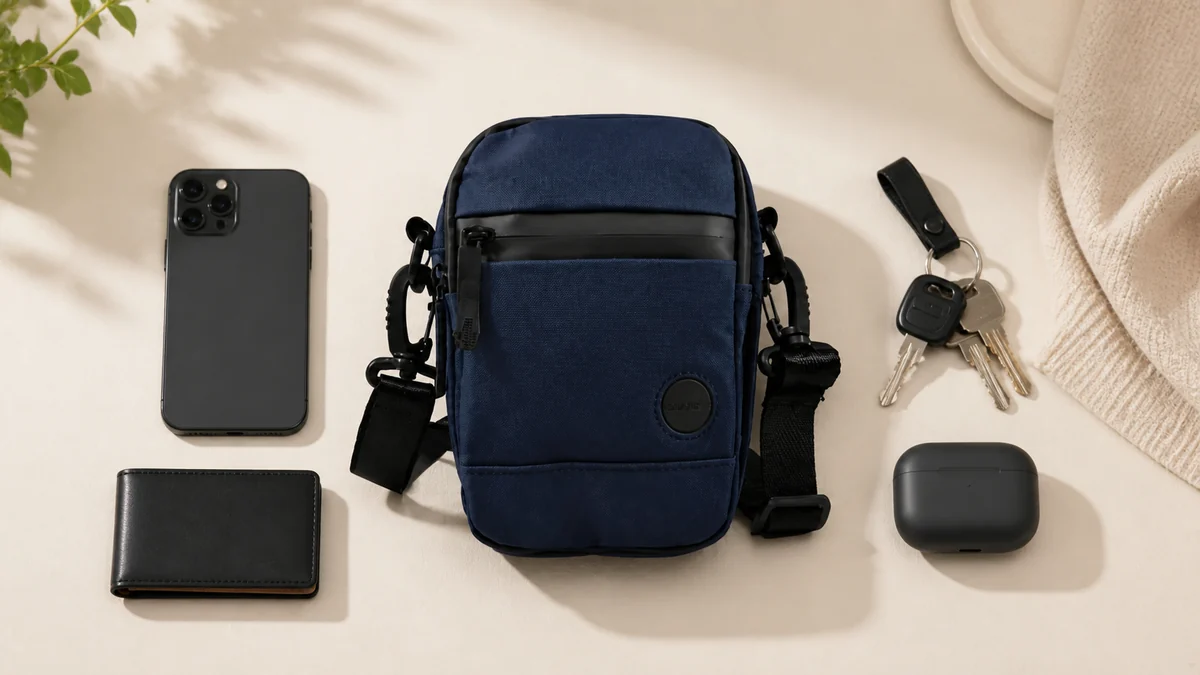
    A phone pouch is designed around a short essentials list. Depending on the pouch and the size of your phone, that may include:

    • A phone in its normal case
    • One or two cards
    • Keys
    • Earphones
    • One small personal item

    It is a good format when quick access and low bulk matter more than internal organisation. It can also help you avoid filling spare space with items you do not need.

    Before choosing one, measure your phone with its case fitted and compare those measurements with the product’s usable dimensions. Do not assume that every phone pouch fits every device.

    What fits in a compact sling bag?

    A compact utility sling is still intended for light everyday carry, but it gives you more room and separation. A typical list might include:

    • Phone
    • Wallet or card holder
    • Keys
    • Earphones
    • Charging cable or compact power bank
    • Sunglasses or another small personal item

    The important advantage is not only capacity. Multiple compartments can keep keys away from a phone, make frequently used items easier to retrieve and reduce the need to empty the whole bag to find something small.

    A compact sling is not a substitute for a backpack when you need to carry large or heavy items. Overfilling it can make the bag uncomfortable and make zips harder to use.

    Compare the two formats

    Question Phone pouch Compact sling bag
    How much do you carry? A phone and a short list of small items Several everyday essentials
    How much organisation do you need? Minimal More separation and zipped sections
    What matters most? Low bulk and quick access Organisation and additional capacity
    When is it most useful? Short errands, walks and simple travel days Commutes, longer outings and organised daily carry
    What should you check? Phone fit, opening, closure and strap Compartment layout, zip access, strap and overall size

    Think about access, not only capacity

    More space is not always more convenient. If you only carry a phone and keys, a larger bag may add unnecessary bulk. If you carry several items, a pouch may require stacking everything together.

    Ask which items you use most often. Your phone, travel card or keys should be easy to retrieve without moving everything else. Product photographs should show openings, zips, compartments and strap attachment points clearly enough for you to understand the layout.

    Check how the bag will sit when worn

    Both formats should have an adjustable strap so you can position the bag comfortably. Consider whether you prefer it:

    • High across the chest
    • At the side of the torso
    • Lower near the hip
    • In front for easier access in crowded places

    Look at the strap width, adjustment hardware and connection points. If the strap is detachable, confirm that the listing shows what is included.

    Use the one-day test before buying

    Place everything you expect to carry on a table. Remove anything you do not normally use. Then divide the remaining items into three groups:

    1. Must be immediately accessible.
    2. Useful but not needed frequently.
    3. Optional items you could leave behind.

    If the first group is mostly your phone plus two or three small items, a phone pouch may be enough. If you need to carry most of groups one and two, a compact sling will usually be easier to organise.

    Which AAROMELIA format should you explore?

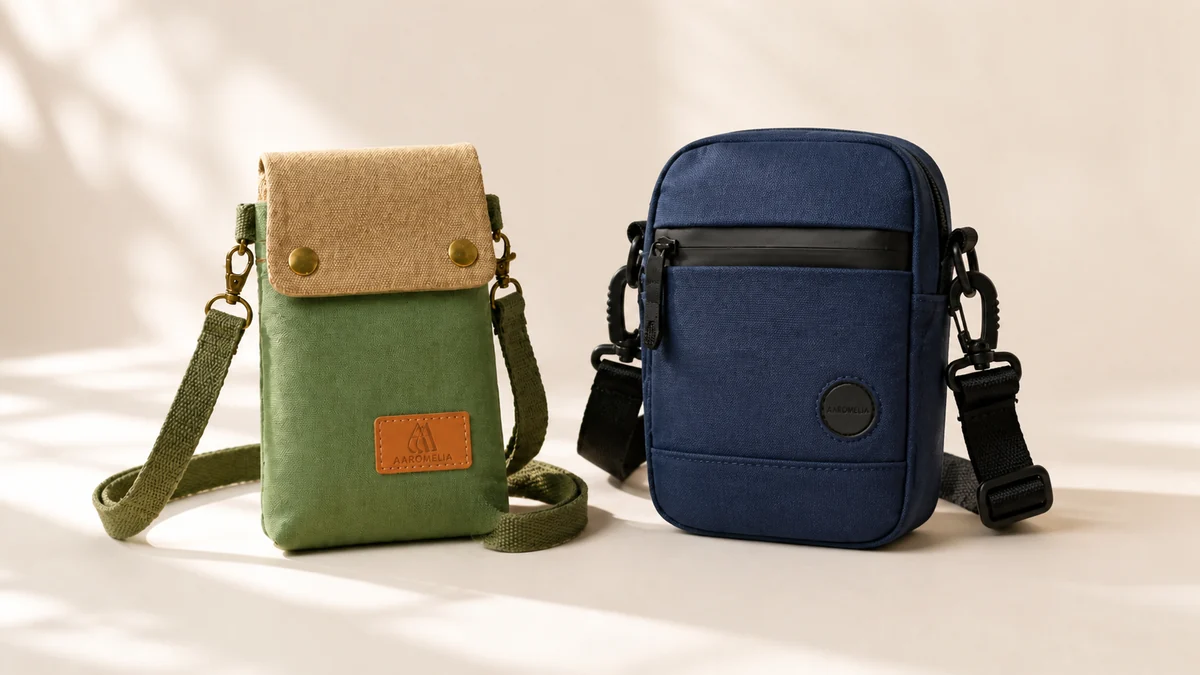
    AAROMELIA’s in-stock phone-pouch colours are Olive & Tan, Navy, and Orange & Olive. These use a slim crossbody format with an adjustable detachable strap, snap-close contrast flap and brass-tone hardware.

    Explore the AAROMELIA Crossbody Pouches collection.

    The in-stock Compact Utility Sling colours are Black, Navy and Graphite Grey. Their compact vertical profile and multiple zip compartments suit people who want more separation while keeping everyday carry relatively light.

    Explore the AAROMELIA Sling Bags collection.

    Review the current product page for exact availability before ordering. Questions before you order? Message AAROMELIA on WhatsApp between 9 AM and 6 PM IST.

    ₹80 shipping below ₹699. Free shipping on orders of ₹699 and above.

    Frequently asked questions

    Is a phone pouch large enough for a wallet?

    That depends on the wallet and pouch dimensions. A slim card holder may fit more easily than a full-size wallet. Measure the items together rather than relying on category names.

    Is a compact sling suitable for a power bank?

    A compact power bank may fit if the product dimensions and compartment layout allow it. Avoid overloading the bag, and keep hard items separated from the phone where possible.

    Which format is better for travel?

    A phone pouch is useful when you want only immediate essentials. A compact sling is more suitable when you need documents, charging accessories or additional organisation. Keep valuables secure and follow the rules of your transport provider or destination.

    Do I need both?

    Not necessarily. Start with your most common routine. Two formats are useful only if you regularly switch between very light carry and a longer everyday list.

  • How to Organise a Compact Sling Bag Without Overpacking

    How to Organise a Compact Sling Bag Without Overpacking

    A compact sling bag is most useful when every item has a reason to be there. Once spare space becomes an invitation to add “just in case” items, the bag can become bulky, harder to search and less comfortable to carry.

    The solution is not a complicated packing system. It is a short routine: decide what belongs, assign each item a place and reset the bag regularly.

    1. Empty the bag completely

    Start with an empty bag. Remove old receipts, packaging, loose coins and anything left from a previous outing.

    Lay the contents where you can see them. It is easier to notice duplicates and unnecessary items on a table than at the bottom of a compartment.

    2. Build a short essentials list

    Your list should reflect the day ahead. A simple everyday group may include:

    • Phone
    • Slim wallet or card holder
    • Keys
    • Earphones
    • One charging accessory, if needed
    • One or two small personal items

    Avoid packing for every possible situation. If an item is rarely used, bulky or easy to obtain at your destination, consider leaving it behind.

    3. Put frequently used items in the easiest section

    Your most accessible compartment should hold items you reach for repeatedly. That may be a phone, travel card or keys.

    Do not place several loose objects on top of the item you use most. Easy access saves time and reduces the chance of dropping something while searching.

    4. Separate hard or sharp objects

    Keys, coins and metal accessories can rub against a phone or other delicate surfaces. Use separate compartments where the bag provides them.

    If an item has a sharp edge, cap or exposed connector, contain it before placing it in the bag. Do not force objects into a compartment that is too small.

    5. Keep cables under control

    A loose charging cable can tangle around keys and other items. Coil it gently and secure it with a reusable tie or place it in a small pouch.

    Carry only the cable or adapter you expect to use. Multiple chargers quickly add bulk to a compact bag.

    6. Place heavier items closer to the body

    Where the layout allows, keep the heaviest item in the compartment that sits closest to your body. This can help the bag feel more stable.

    Avoid carrying objects that are too heavy for a compact sling. If the strap pulls uncomfortably or the bag changes shape, reduce the load or move to a more suitable bag.

    7. Leave some empty space

    A fully packed compartment is not necessarily well organised. You need enough clearance to open zips, see the contents and remove an item without pulling out everything else.

    As a practical check, close every compartment without pressing down on it. If the zip strains or the bag bulges, remove something.

    8. Use a simple compartment rule

    Give each section one purpose:

    • Quick access: phone or travel card
    • Secure essentials: wallet and keys
    • Small accessories: earphones and cable
    • Occasional item: one small personal item

    The exact arrangement depends on the bag. The point is consistency. When each item returns to the same place, you spend less time searching.

    9. Reset the bag at the end of the day

    A thirty-second reset prevents clutter from accumulating. Remove rubbish and receipts, return borrowed items and check whether anything needs charging or replacing.

    Once a week, empty the bag and wipe away loose dust according to its care instructions. Follow the product-specific care guidance and avoid unverified cleaning methods.

    A five-minute packing check

    Before leaving, ask:

    • Do I expect to use every item today?
    • Can I reach my phone and keys easily?
    • Are hard items separated from delicate ones?
    • Are cables contained?
    • Does every zip close without strain?
    • Does the bag sit comfortably when worn?

    If the answer to the last two questions is no, the bag is probably carrying too much.

    Explore AAROMELIA Compact Utility Slings

    AAROMELIA’s in-stock Compact Utility Sling colours are Black, Navy and Graphite Grey. The compact vertical format includes multiple zip compartments and an adjustable shoulder strap for organised everyday essentials.

    Explore the AAROMELIA Sling Bags collection.

    Always review the live product page for current availability and verified specifications. Questions before you order? Message AAROMELIA on WhatsApp between 9 AM and 6 PM IST.

    ₹80 shipping below ₹699. Free shipping on orders of ₹699 and above.

    Frequently asked questions

    How much should I carry in a compact sling?

    Carry only what fits without distorting the bag or straining the closures. Comfort and usable space matter more than filling every compartment.

    Where should I keep my keys?

    Use a separate zipped section where possible so the keys do not rub against your phone or other delicate items.

    Can I carry a water bottle in a compact sling?

    Only if the product is specifically designed and dimensioned for one. Do not assume a bottle fits based on photographs. Carry a bottle separately when its size or weight is unsuitable for the bag.

    How often should I reorganise the bag?

    A quick daily reset and a full weekly empty-and-check routine are usually enough to prevent clutter.

WhatsApp support